
Your Hiring Strategy Should Treat It Like One.
The job site has always been a place where physical risk is managed, measured, and mitigated. Fall protection, lockout/tagout, PPE — these are the standards that define workplace safety culture. But across construction, manufacturing, energy, and industrial sectors, a quieter risk factor has been building for years. And it can’t be solved with a hard hat or another harness.
Mental health is a workplace safety issue, and the data makes a compelling case.
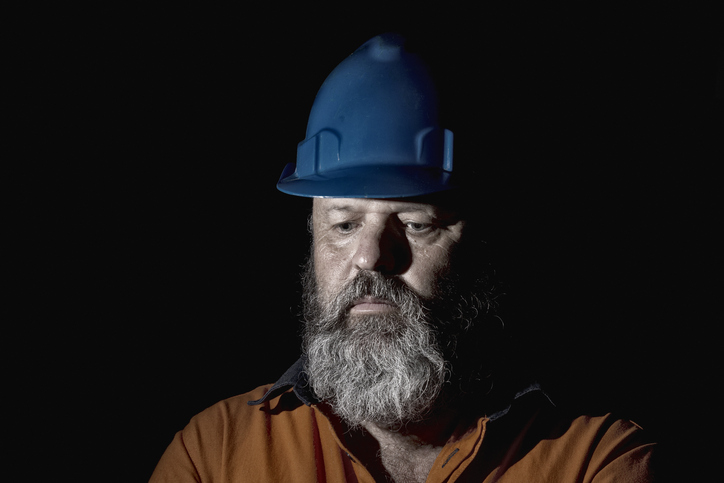
According to recent workplace research, 76% of workers report experiencing at least one symptom of a mental health condition such as stress or anxiety. More than half say they’ve felt burned out because of their job. In the United States, an estimated 37 million workers experience mental health challenges tied directly to their work. And the past several years have demonstrated a continual rise in stress, depression, and anxiety, accounting for nearly one million cases of work-related illness, which makes mental health the single leading contributor to work-related health issues.
For industries where a single lapse in judgment can put lives at risk, these numbers aren’t just an HR concern. They represent a real and present safety risk.
The Human Factor
Safety professionals have long referred to the “human factor” when analyzing workplace incidents. It’s an umbrella term that enables us to understand the full picture of an incident and the conditions that shape how people behave and respond on the job. Fatigue. Cognitive overload. Emotional strain. Communication breakdowns.
Mental health sits squarely in the overlap.
A safety leader operating in a high-risk environment needs to maintain situational awareness, communicate clearly under pressure, recognize signs of distraction or fatigue in the workers around them, and make sound decisions before or when things go wrong. When stress or burnout enters the equation, every one of those capabilities can be compromised.
Mental health is a personal issue. But it’s also an organizational safety risk with a direct line to incidents, injuries, and fatalities.

When Stress Goes Unaddressed: Dealing with Substance Abuse
There’s a pattern safety professionals know well, even if it rarely makes it into formal incident reports: unmanaged stress and untreated mental health challenges often lead workers toward self-medication.
The construction industry offers one of the starkest examples. According to a study from the Substance Abuse and Mental Health Services Administration, construction ranks second only to hospitality among industries with the highest rates of substance abuse. Among full-time construction workers, 16.5% (roughly 1.6 million people) reported heavy drinking in the previous month. Another 11.6% reported using illicit drugs in the past month, and 14.3% reported addiction to alcohol or other substances.
The driver for this kind of behavior is often pain, sometimes physical pain from repetitive and strenuous work, but also the psychological weight of high-pressure environments and long hours with limited support. When workers don’t have healthy outlets or access to mental health resources, substances become a coping mechanism.
The consequences compound quickly. Alcohol and drugs impair motor function, slow reaction times, and compromise decision-making, which are the exact capabilities workers need most in hazardous environments.
What’s the cost of untreated mental health? Burnout, absenteeism, and a measurable increase in the likelihood of injury and death.
What This Means for How You Hire
Understanding the connection between mental health and site safety changes what you should be looking for in a safety professional, and, perhaps more importantly, how you evaluate them.
The rise of AI-assisted recruiting has made it faster and easier to screen candidates based on credentials: OSHA certifications, years of experience, employment history. That efficiency has real value. But for safety-critical roles, these credentials only tell part of the story.
The qualities that make a safety professional genuinely effective in high-stakes environments are largely behavioral. High emotional intelligence. The ability to stay composed during an incident. A track record of earning trust with crews rather than being a safety cop. Situational awareness that is sharp enough to catch warning signs of poor, untreated mental health before they become near-misses.
A tool can scan certifications. A database can filter a list. But only a human expert can evaluate whether someone is actually ready to protect your people and your productivity. Only a human has the nuance to determine whether a candidate has the judgment, the communication, and the real-world composure that the role demands.
More Than a Match Score
At ResponsAble Safety Staffing, our recruiters aren’t generalist sourcers running keyword searches. They’re experienced industry professionals, which means they understand what the role actually requires when things get hard. They assess
- how candidates think under pressure.
- how they lead difficult conversations on a job site.
- how they’ve handled real incidents and recognized human risk factors before they escalated.
That’s paired with an ongoing recruitment model, a constantly cultivated national talent bench, so that when your operation shifts, scales, or faces an urgent need, you’re not waiting on a cold search. You’re matched with credentialed, field-tested professionals who are already known to us.
The Future Still Needs Humans
Industries are pushed to innovate faster than ever. Between digitization and AI, the pressure to make quick decisions and optimize operations continues to accelerate. But all of that loses its value the moment something goes wrong on a job site and you need someone who can read the room, recognize a struggling worker, de-escalate a situation, or make a sound call under pressure.
The mental health crisis reshaping the American workforce isn’t going away. The organizations that respond by investing in human-centered safety leadership will be better positioned to protect their people, maintain compliance, and build teams resilient enough to handle whatever comes next.
That person keeping your site safe is human. How you find them, evaluate them, and support them matters more than any efficiency shortcut.
ResponsAble is built for exactly that.
Ready to talk about what human-led safety staffing looks like for your operation?
Frequently Asked Questions
- Why is mental health considered a workplace safety issue?
While business and industry have historically considered mental health a private matter, it directly affects the cognitive and behavioral capabilities that workers rely on to stay safe. Focus, reaction time, decision-making, and communication make a big impact, especially in high-risk environments. When these capabilities are compromised by stress, burnout, or emotional strain, the probability of incidents increases. TLDR: the cost of ignoring mental health can be staggering.
- What is the connection between stress and substance abuse in the workplace?
Research consistently shows that unmanaged stress is a significant driver of substance use. Workers who lack healthy coping mechanisms or access to mental health support may turn to alcohol or drugs to manage physical pain, emotional strain, or job-related pressure. And the resulting impairment creates serious hazards for the individual and everyone around them.
- Which industries are most affected by mental health and substance abuse risks?
Physically demanding, high-pressure industries carry the greatest risk. Construction, manufacturing, oil and gas, petrochemical, energy, and industrial services all see elevated rates of both mental health challenges and substance abuse. The construction industry specifically reports some of the highest rates of alcohol and drug use among full-time workers of any sector in the U.S.
- How does substance abuse affect workplace safety?
Alcohol and drugs impair motor function, slow reaction times, and reduce a worker’s ability to make good decisions, all of which are extremely critical in hazardous environments. In industries already prone to accidents, impairment dramatically increases the risk of injury and fatality. Substance abuse also contributes to absenteeism, reduced productivity, and increased liability for employers.
- How can companies proactively address mental health as a safety issue?
Leadership tone matters a great deal. When safety professionals model healthy stress management, typically crews follow. Effective approaches include creating a culture where mental health is openly acknowledged, providing access to employee assistance programs, training safety leaders to recognize behavioral warning signs, reducing stigma around help-seeking, and ensuring that workload and scheduling don’t consistently push workers past sustainable limits.